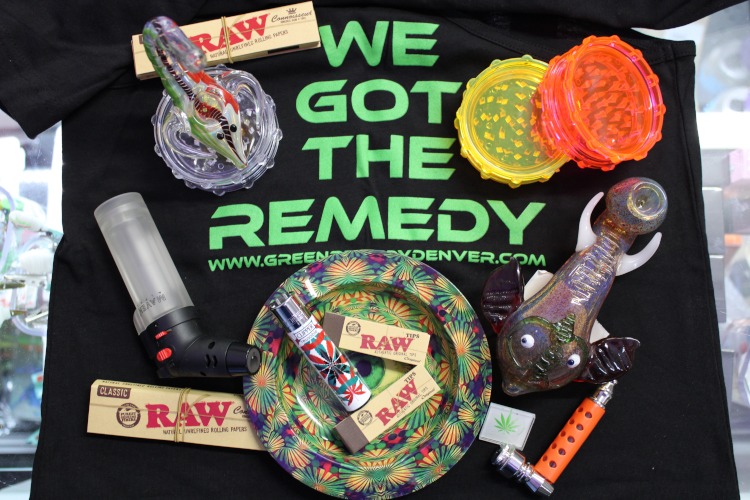
Dispensary vocabulary is a mix of botany, chemistry, manufacturing jargon and slang that predates legalization by decades. Most of it nobody explains, because the people using it forgot it was ever confusing.
Here’s the working vocabulary, grouped by where you’ll run into it.
At the counter
Budtender
The person behind the counter who helps you choose. The job combines product knowledge with a fair amount of translation, and asking one a direct question is consistently the fastest way to get a good answer.
Rec and med
Recreational and medical. Recreational requires you to be 21 or older with a valid ID. Medical requires a Colorado medical card and carries different purchase limits and tax treatment.
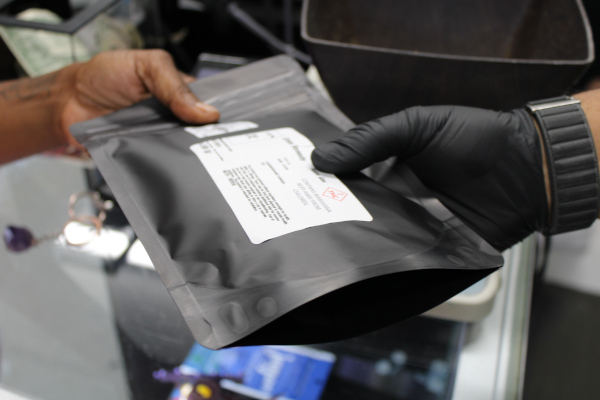
Exit bag
The child-resistant bag your purchase leaves in. Colorado requires it, which is why you can’t walk out holding a loose jar.
Daily limit
The maximum you can buy in one day. For recreational customers that’s one ounce of flower, 8 grams of concentrate, or 800 mg of THC in marijuana products, mixed and matched up to the equivalent of an ounce. It applies per person per day across every store in the state.
Equivalency
The conversion rate between product categories that makes the daily limit work. Eight grams of concentrate counts as the equivalent of an ounce of flower, as does 800 mg of THC in products.
Metrc
Colorado’s seed-to-sale tracking system. Every plant and package carries a tag in it, which is what makes the batch numbers on your label traceable.
COA
Certificate of analysis, meaning the lab report for a given batch. It lists cannabinoid content and the results of contaminant testing, and often the terpene profile. Many producers link it from a QR code on the package.
Singles
Pre-rolls sold individually instead of in a pack.
Flower and quality
Top shelf, mid shelf, value
Price tiers. They reflect a combination of appearance, aroma, cure quality and potency, and the line between tiers is set by each shop rather than by any standard.
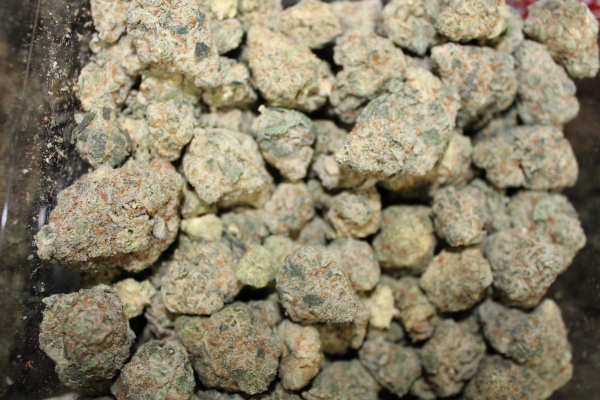
Smalls and popcorn
The smaller buds from the lower branches of the same plants. Same strain, same cultivation, same lab testing, noticeably cheaper, and they photograph badly. If you use a grinder, you’ll never notice the difference.
Shake
The loose material that collects at the bottom of a container. Usually destined for pre-rolls or extraction.
Trim
The leaf material cut away from the buds at harvest. Lower in cannabinoids than the flower itself and commonly used for extraction.
Cure
The controlled drying and aging after harvest, typically a few weeks in sealed containers with careful humidity control. A good cure is most of what separates flower that smells alive from flower that smells like hay.
Nug run
Concentrate made from whole buds rather than trim. A trim run is the opposite and generally costs less.
Light dep, or dep
Light deprivation. A greenhouse technique that controls the plant’s light exposure to trigger flowering on schedule, giving growers some of the control of indoor cultivation with much of the cost advantage of sun.
Indoor, outdoor, greenhouse
Where the plant was grown. Indoor offers the most environmental control and costs the most to produce. Outdoor is the cheapest and the most weather-dependent. Greenhouse sits between the two.
Hand-trimmed
Finished with scissors rather than by machine. Slower, more expensive and gentler on the trichomes, which is why top shelf flower is usually hand-trimmed.
Chemistry on the label
Terpenes
The aromatic compounds responsible for how a plant smells, found in cannabis and also in pine, citrus peel and lavender. Common ones on Colorado labels include myrcene, limonene, pinene, caryophyllene and linalool.
THCA
Tetrahydrocannabinolic acid, the acidic precursor that makes up most of the THC content in raw cannabis. It converts to THC when heat is applied, which is what happens when you smoke, vape or bake it.
Total THC
The combined figure a label reports, calculated as THCA multiplied by 0.877 plus any delta-9 THC already present. The 0.877 accounts for weight lost during the conversion.
Entourage effect
A term for the idea that cannabinoids and terpenes interact to shape the overall experience rather than acting independently. It’s widely used in the industry and the supporting research is still limited, so treat it as a working theory rather than an established mechanism.
Kief
The powdery collection of trichomes that falls through a grinder screen. Essentially unpressed hash.
Trichomes
The resin glands on the surface of the flower, where most of the cannabinoids and terpenes are produced. They’re what makes good flower look frosted.
Concentrates
Resin
A concentrate made using a solvent such as butane, propane or CO2. Colorado requires residual solvent testing on these and the solvent has to be named on the label.
Rosin
A concentrate made with heat and pressure alone, no solvent involved. The solvent field on a rosin label will be empty.
Live
Made from plants that were flash-frozen at harvest instead of dried and cured, which preserves considerably more of the original terpene content.
Distillate
The most refined concentrate in the case. Repeated processing strips away everything except the target cannabinoid, producing a clear oil that often tests above 90% THC and has almost no smell or taste.
Hash and bubble hash
Solventless concentrates made by separating trichomes from the plant mechanically. Bubble hash, also called ice water hash, uses ice water and a series of mesh screens.
Shatter, badder, budder, crumble, sugar, sauce
Textures rather than production methods. The same extract can be finished as a glassy shatter, a whipped badder or a loose sauce depending on how it’s handled after extraction.
Diamonds
Crystallized THCA, usually sold sitting in a pool of terpene-rich sauce. The diamonds carry the potency and the sauce carries most of the flavor.
FSE and HTE
Full spectrum extract and high terpene extract. Both describe concentrates made to retain as much of the plant’s original chemical profile as possible.
Dab
A single dose of concentrate vaporized against a heated surface.
Vapes and pre-rolls
Cart
Short for cartridge. A small tank of cannabis oil that screws onto a battery.
510 thread
The near-universal connection standard between cartridges and batteries. The name describes the physical thread, which has ten threads at a half-millimeter pitch. Any 510 cart fits any 510 battery.
Disposable
An all-in-one vape with the battery built in, used until it’s empty and then discarded.
Pod
A cartridge built for one manufacturer’s specific battery rather than the 510 standard. Pods only fit their own system.
Infused pre-roll
A pre-roll with concentrate added, either coated on the outside, mixed into the flower, or run through the center. Substantially stronger than a standard pre-roll.
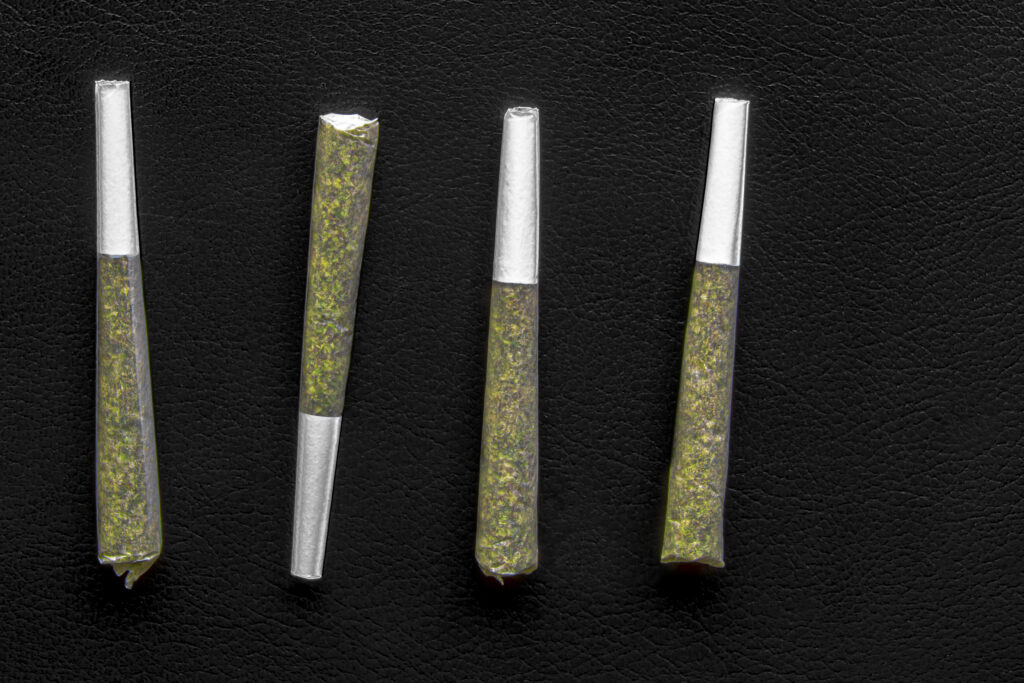
Cone
A pre-formed paper, wider at the top than the bottom, that gets packed rather than rolled.
Edibles and drinks
Nanoemulsion
The process of breaking cannabis oil into particles small enough to stay suspended in water, which is what makes modern THC seltzers mix properly and come on faster than traditional edibles. Our guide to THC drinks goes deeper.
Tincture
A liquid cannabis product, usually alcohol or oil based, dosed with a dropper.
Serving vs package
Colorado caps a single recreational edible serving at 10 mg of THC. The package total is listed separately, so a 100 mg package contains ten servings.
Still stuck on a word?
Ask. Nobody behind the counter minds explaining what a term means, and plenty of this vocabulary is regional or specific to one producer anyway.
It’s the highest price tier, reflecting appearance, aroma, cure quality and potency. Each shop sets its own tiers, so top shelf at one store isn’t a standardized grade.
What is nug run concentrate?
Concentrate made from whole buds instead of trim. It generally costs more and is considered higher quality than a trim run.
What does light dep mean?
Light deprivation, a greenhouse method that controls the plant’s light exposure to trigger flowering on a schedule. It offers more control than full outdoor growing at lower cost than indoor.
What is the difference between resin and rosin?
Resin is made with a solvent. Rosin is made with heat and pressure alone. One letter apart, completely different processes.
What does 510 thread mean on a vape cart?
It’s the standard connection between cartridges and batteries, named for its ten threads at a half-millimeter pitch. Any 510 cartridge fits any 510 battery.
Is kief the same as hash?
Close. Kief is loose trichome powder. Hash is kief that has been pressed or otherwise consolidated.
For adults 21 and older. Please consume responsibly and never drive under the influence.
A standard pre-roll is ground flower in a paper. An infused pre-roll is the same thing with cannabis concentrate added, which typically pushes potency from the low twenties into the thirties, forties or higher. The difference in strength is large enough that treating one like the other is the most common mistake people make with them, and the two burn differently too.
What’s in a standard pre-roll
A pre-roll is ground cannabis in rolling paper, usually with a cardboard filter tip, sold ready to smoke. Most sit at half a gram or a full gram.
Here’s the part worth knowing. The industry has a wide range of what actually goes inside. Some producers roll whole flower, grinding the same buds they sell in jars. Others use shake and trim, which are the loose material and leaf trimmings left over from processing. Both are legal, both are tested, and the difference in the smoking experience is real.
You can usually tell from the packaging and the price. Producers who use whole flower tend to say so prominently, because it’s a selling point and it costs them more. If the package doesn’t mention it, asking is reasonable, and your budtender will know.
A typical pre-roll lands somewhere in the high teens to mid twenties for THC percentage, matching whatever flower went into it.
What “infused” actually means
Infused pre-rolls add concentrate, and the method varies enough to matter.
Coated on the outside means the joint is rolled, then dampened with concentrate and rolled in kief. These look frosted and are the most common style on most menus.
Mixed into the flower means concentrate is blended with the ground flower before rolling. The strength is distributed evenly through the joint rather than concentrated at the edges.
A center core means a line of concentrate runs down the middle, sometimes called a “donut” or a “cannon.” These usually burn hottest in the middle of the smoke.
What gets added varies too. Distillate is the cheapest option and adds potency with little flavor. Live resin or hash adds potency along with a lot of aroma, and costs more. Diamonds push the THC number highest of all. The package will usually name which, and if it doesn’t, that itself is informative.
Potency, side by side
Type of Pre-roll
Typical THC
What that means in practice
Standard pre-roll
18–25%
Comparable to smoking the flower it came from
Infused pre-roll
30–50%+
Roughly double, sometimes more
These are market ranges rather than guarantees, and any specific product’s number is on its label.
The practical translation is straightforward. If a standard half-gram joint is a comfortable amount for you, half an infused one is the equivalent starting point. People who ignore that generally find out within about ten minutes.
They burn differently
Concentrate melts rather than burning the way plant material does, so an infused pre-roll behaves differently in your hand.
It burns slower, which surprises people the first time. A standard pre-roll that would be gone in ten minutes might take twenty.
It also runs and canoes more readily, meaning the burn travels down one side instead of staying even. Rotating it as it burns helps, as does lighting it more patiently at the start.
It can go out. The higher oil content means an infused joint left sitting for a minute often needs relighting, which is normal rather than a defect.
And it will be sticky. That’s the concentrate, and it’s a sign the product is what it says it is.
When each makes sense
A standard pre-roll is the right choice if you want something comparable to smoking flower, if you’re sharing with people whose tolerance you don’t know, or if you want to finish a joint in one sitting without it dominating the evening. It’s also the better value per gram.
An infused pre-roll makes sense if you have an established tolerance, if you want fewer sessions for the same effect, or if you’re specifically after the flavor that live resin or hash adds. Treat it as two or three sessions rather than one.
If you’re new to cannabis, start with a standard pre-roll. Infused products are a poor place to learn what your tolerance is.
Buying pre-rolls at Green Remedy
Pre-rolls are the lowest-friction way to smoke flower. No grinder, no papers, no technique, which is why they’re consistently what first-timers leave with and what experienced people stock up on.
Our bundles are built around that. 28 joints for $55 works out to under two dollars each, which is the kind of math people re-read to be sure they have it right. 5 for $20 is the same idea at a smaller commitment, good for a weekend or for deciding whether you’re a 28-at-a-time person.
A pre-roll with cannabis concentrate added, either coated on the outside, mixed into the ground flower, or running down the center as a core. The concentrate roughly doubles the potency.
How much stronger are infused pre-rolls?
Standard pre-rolls typically test between 18% and 25% THC. Infused pre-rolls commonly land between 30% and 50% or higher, depending on what was added and how much.
Why does my infused pre-roll keep going out?
The concentrate melts rather than burning like plant material, so infused joints need more attention to stay lit. Relighting is normal.
Are pre-rolls made from shake?
Some are and some aren’t. Producers who use whole flower usually advertise it, because it costs more to make. If the package is silent on the question, ask your budtender.
How long does a pre-roll stay fresh?
Weeks to a couple of months in the sealed package. Once opened, a pre-roll dries out faster than flower in a jar because of the surface area exposed. Keep them sealed and out of heat and light.
Can beginners smoke infused pre-rolls?
They’re a difficult starting point given the potency. A standard pre-roll is a better place to learn what your tolerance is, and you can move up from there.
How many joints are in an eighth?
Between seven and ten, depending on whether you roll closer to half a gram or a third of a gram each.
For adults 21 and older. Please consume responsibly and never drive under the influence.
An eighth of cannabis is 3.5 grams. It gets the name because it’s one eighth of an ounce, and an ounce in the cannabis world is treated as 28 grams. From there the rest of the chart follows the same logic. A quarter is 7 grams, a half ounce is 14 grams and a full ounce is 28 grams. Those four numbers cover almost every purchase you’ll ever make at a dispensary in Colorado.
Cannabis weight chart
What you ask for
Grams
Fraction of an ounce
Gram
1 g
1/28
Two grams
2 g
1/14
Eighth
3.5 g
1/8
Quarter
7 g
1/4
Half ounce
14 g
1/2
Ounce
28 g
1
An eighth is far and away the most common purchase, which is why it has the most nicknames and why most menus are organized around it.
Why an ounce is 28 grams when it technically isn’t
A real avoirdupois ounce is 28.3495 grams, so an eighth of one works out to 3.5437 grams rather than a clean 3.5. The industry rounded down years ago and never looked back, partly because 28 divides so neatly and partly because scales and packaging standardized around it long before legalization.
The practical effect is small. Buying four eighths gives you 14 grams instead of the 14.17 grams a true half ounce would contain, a difference of about a sixth of a gram. Colorado requires net weight on the label recorded to a tenth of a gram, so you can check what you actually received. Most dispensaries, Green Remedy included, package slightly over rather than slightly under.
How many joints you get out of each size
Joint size varies a lot by person, but most pre-rolls on Colorado shelves land between 0.5 and 1 gram, and most people rolling at home come in somewhere around 0.35 to 0.5 grams.
Size
At 0.35 g
At 0.5 g
At 1 g
Eighth (3.5 g)
10 joints
7 joints
3–4 joints
Quarter (7 g)
20 joints
14 joints
7 joints
Ounce (28 g)
80 joints
56 joints
28 joints
This is worth running before you decide between flower and pre-rolls. An ounce of flower rolled at half a gram gives you roughly 56 joints, which is why bulk pre-roll bundles tend to be priced the way they are.
The math that actually saves you money
Price per gram is the only honest way to compare two options on a menu, and dispensaries rarely print it. The arithmetic takes a few seconds.
Purchase
Example price
Price per gram
Single gram
$12
$12.00
Eighth (3.5 g)
$35
$10.00
Quarter (7 g)
$60
$8.57
Ounce (28 g)
$150
$5.36
Small bud ounce
$55
$1.96
Prices here are illustrative, though the shape of the curve holds everywhere. Buying up a size almost always lowers your cost per gram, and the drop between an eighth and an ounce is usually steep.
Small bud is where the curve breaks hardest. Those are the smaller pieces from the lower branches of the same plants, with the same strain, the same cultivation and the same lab testing behind them. The only real difference is that they photograph poorly. Our small bud ounce runs $55 and the half ounce is $32, which works out to under two dollars a gram.
How much you can legally buy in a day
Colorado sets a daily purchase limit for recreational customers at one ounce of flower, or the equivalent in other categories. Concentrates count at 8 grams and marijuana products at 800 milligrams of THC, and you can mix across categories as long as the combined total stays within the equivalent of an ounce.
A few things people tend to get wrong about this. The limit is per person per day across every store in the state rather than per store, and the tracking system catches it. Possession limits are separate from purchase limits and are higher. Non-psychoactive topicals such as lotions and balms sit outside the one-ounce cap entirely.
If you’re buying an ounce of flower, that’s your flower allowance for the day. Your budtender will flag it well before you get close, so this isn’t something to calculate at the counter.
Weed slang, decoded
A zip is an ounce, from the days when an ounce filled a sandwich bag to the zipper. A half O is a half ounce, or 14 grams. A dub historically meant twenty dollars’ worth rather than a fixed weight, which made it a useful term in an unregulated market and a mostly useless one now that everything is sold by labeled weight.
A QP is a quarter pound, roughly 113 grams. You’ll hear it, but you can’t buy one in a day in Colorado since it’s four times the legal daily limit.
Smalls and popcorn both refer to small bud. Shake is the loose material that collects at the bottom of a container, and trim is the leaf material removed during harvest. Both are cheaper and both are typically destined for pre-rolls or extraction.
Shopping by weight at Green Remedy
If you’re new, an eighth is the right starting point for a strain you haven’t tried. It’s enough to form a real opinion and small enough that a miss doesn’t sting.
If you’ve found something you like, the per-gram math makes a strong case for buying up a size. And if you mostly roll your own or use a grinder, small bud gives you the same flower at a fraction of the price, since you were going to break it up anyway.
An eighth is 3.5 grams, which is one eighth of a 28-gram ounce.
How many grams are in a quarter?
A quarter is 7 grams, or two eighths.
How many eighths are in an ounce?
Eight. An ounce is 28 grams and each eighth is 3.5 grams.
How many joints can you roll from an eighth?
Between 7 and 10 for most people, depending on whether you roll closer to half a gram or a third of a gram per joint.
How much does an eighth cost in Denver?
It depends on the shelf tier, and the range across Denver is wide. The more useful number is price per gram, which lets you compare an eighth against a quarter or an ounce directly. Our current pricing and deals are here.
How much weed can I buy in one day in Colorado?
One ounce of flower, 8 grams of concentrate, or 800 mg of THC in marijuana products, mixed and matched up to the equivalent of an ounce. The limit applies per person per day across all stores.
Is an ounce really 28 grams?
An ounce is 28.3495 grams. The cannabis industry rounds to 28, so an eighth is sold as 3.5 grams rather than 3.5437 grams.
For adults 21 and older. Please consume responsibly and never drive under the influence.
Every cannabis product sold legally in Colorado carries a label with the same core information. You’ll find a potency statement, a batch number tying the product to its lab results, the license numbers of the businesses that grew and sold it, the net weight, a contaminant testing statement and a set of required warnings, along with a diamond-shaped universal symbol marking it as a THC product. Learning to read the label takes about five minutes and changes how you shop, mostly because the number everyone fixates on turns out to be the least reliable thing printed there.
The universal symbol
The diamond containing “!THC” is Colorado’s universal symbol, and it has to appear on the front of the package at a minimum of half an inch square, alongside the statement “Contains Marijuana. Keep out of the reach of children.”
Its only job is instant recognition. If you’ve decanted something into another container at home, the symbol is what’s missing, which is a good argument for keeping products in their original packaging when there are kids, roommates or guests around.
The potency statement, and the 15% nobody mentions
Flower and concentrates list potency as a percentage of total weight. Edibles and drinks list it in milligrams, both per serving and per package, with retail servings capped at 10 mg of THC.
Here’s the part worth knowing. Colorado permits a variance on the tested potency figure, and the allowance runs to plus or minus 15 percent. A flower labeled 24% THC can legally test anywhere from roughly 20.4% to 27.6%. An edible labeled 10 mg per piece can legally land between 8.5 and 11.5 mg.
That variance is the reason chasing a one or two point difference between two labels is wasted effort. The gap between a 24% and a 26% flower sits comfortably inside the margin of error, so the two products may well be identical in practice or reversed. Potency tells you roughly which tier you’re in and very little more.
Total THC, THCA, and why the math matters
Raw cannabis contains very little delta-9 THC. Most of what’s in the plant is THCA, an acidic precursor that converts to THC when heat is applied, which is what happens when you smoke, vape or bake it.
Labs report both, and the label’s “total THC” figure combines them using a conversion that accounts for the weight lost during that reaction:
Total THC = (THCA × 0.877) + delta-9 THC
The 0.877 comes from the molecular weight difference between the two compounds. A flower testing at 25% THCA and 0.5% delta-9 THC reports total THC of about 22.4%.
This is useful in two directions. It explains why a label might show a low delta-9 number next to a high total, which is normal rather than a red flag. It also means that if you ever see a product advertising a THC figure that looks implausible for its category, checking whether someone simply added THCA and THC together without the conversion is a reasonable first guess.
Batch numbers and what they unlock
The harvest batch number, or production batch number for manufactured products, is the thread connecting your package to its laboratory results. Colorado requires everything to be tested by a licensed independent facility before sale, covering potency, microbials, mycotoxins, heavy metals and pesticides, with residual solvent testing added for concentrates.
Many producers now print a QR code linking to the full certificate of analysis for that batch, which is where you’ll find the complete cannabinoid breakdown and, often, the terpene profile. If there’s no QR code, the batch number and the producer’s website will usually get you there. The batch number is also what you’d reference if you ever needed to report a problem with a product.
License numbers, net weight and dates
The label carries license numbers for the cultivation facility, any manufacturer involved and the retail store. These are the audit trail, and they’re the reason legal products can be traced and unlicensed products can’t.
Net weight is recorded to a tenth of a gram and measured before packaging. If you bought an eighth, the label should read 3.5 grams or a little more. Our guide to cannabis weights covers what each size should weigh.
You’ll also find a date of sale, and for many products a harvest or production date. Flower is at its best within a few months of harvest when it’s stored properly, so a harvest date is worth a glance. An older date isn’t disqualifying, though it does make storage conditions matter more.
The contaminant testing statement
Colorado requires the package to state its testing status. A product that has passed contaminant testing says so, referencing compliance with the state’s mandatory testing rules. A product that has not been tested for residual solvents, mold and mildew has to carry the explicit statement that it hasn’t.
Read that line. It’s small, it’s easy to skip, and it’s one of the few places on the label where the difference between two products is categorical rather than a matter of degree.
Concentrates carry extra information
Concentrate labels add a solvent list, naming anything used in extraction. Solventless products such as rosin will show nothing there, which is the quickest way to confirm what you’re holding. Our concentrates guide explains what the different extraction methods actually produce.
Concentrate labels also include a statement of intended use, drawn from a fixed list the state maintains, which tells you whether a product is meant to be inhaled, taken orally, or applied to skin. Colorado also requires an educational resource pamphlet to be provided with every concentrate purchase, including a recommended serving size.
What the label does not tell you
Terpenes are frequently absent. Many producers publish the full terpene profile on the certificate of analysis or on the package voluntarily, and many don’t, so the aromatic compounds that shape a lot of the experience are often the thing you have to go hunting for.
The label also says nothing about how the plant was grown, how long it was cured, or how it’s been stored since leaving the facility. Two products with nearly identical labels can be noticeably different in the jar, and that difference comes from everything the label doesn’t capture.
How to actually use this when you’re shopping
Start with the category and the format rather than the number. Decide what you want and roughly how strong before you start comparing labels.
Treat potency as a tier instead of a score. Anything within a few points is effectively the same, and the 15% variance guarantees it.
Check the testing statement, then look for a terpene profile or a QR code if the aromatics matter to you. Glance at the harvest date on flower.
Then ask your budtender what the lab report doesn’t show. They’ve usually opened the product, and that’s information no label carries.
What is the difference between live resin and live rosin?
Live resin is made using a solvent such as butane or propane. Live rosin is solventless, pressed from ice water hash with heat and pressure. Both start from fresh-frozen plants, and live rosin costs considerably more to produce.
Is distillate better than live resin?
Distillate tests higher for THC and costs less. Live resin keeps the plant’s original terpene profile, so it tastes markedly more like the strain it came from. Which is better depends on whether you’re buying for potency or flavor.
What does “live” mean in live resin?
The plants were flash-frozen at harvest instead of dried and cured, which preserves far more of the terpene content.
Are solventless concentrates safer?
Solventless products introduce no solvent that has to be removed. Colorado requires residual solvent testing on solvent-based concentrates before they can be sold, so both categories are tested before reaching the shelf.
What are cannabis diamonds?
Crystallized THCA, usually sold suspended in a terpene-rich sauce. The diamonds carry the potency and the sauce carries most of the flavor.
How much concentrate can I buy in Colorado?
Recreational customers can purchase up to 8 grams of concentrate per day, counted within the same overall daily limit as flower.
Does shatter mean it was made with a solvent?
Not necessarily. Shatter describes texture rather than process, though in practice most shatter on the market is solvent-based.
For adults 21 and older. This post is general information about Colorado labeling requirements and is not legal advice. Please consume responsibly and never drive under the influence.
If you’ve ever visited a dispensary or looked at a cannabis menu, you’ve probably seen products categorized as indica, sativa, or hybrid. These terms are commonly used to describe different types of cannabis and the kinds of experiences they may provide.
For people new to cannabis, the differences between these categories can be confusing. Understanding what they mean—and how they might affect your experience—can help you choose products that match your mood, lifestyle, and goals.
Whether you’re a beginner exploring cannabis for the first time or a seasoned consumer trying something new, this guide will explain the basics of indica, sativa, and hybrid strains.
If you’re exploring cannabis in Denver, knowledgeable budtenders at dispensaries like Green Remedy can also help you find products that fit your preferences.
What Is Indica?
Indica strains are often associated with relaxing, calming experiences. Many cannabis consumers choose indica strains when they want to unwind after a long day, relax in the evening, or settle in for a movie night.
Indica plants are typically shorter and bushier than sativa plants and tend to produce dense buds. While the plant’s appearance isn’t the only factor that determines effects, indica strains are commonly linked to a more mellow, body-focused experience.
People often turn to indica strains when they want to:
Relax after work
Reduce stress and tension
Enjoy a calm evening
Watch movies or listen to music
Because of their relaxing reputation, indica strains are frequently recommended for nighttime use.
What Is Sativa?
Sativa strains are often described as more uplifting and energizing compared to indica strains. Many consumers prefer sativa strains during the daytime or when they want a boost of creativity or focus.
Sativa plants are generally taller and thinner, with lighter, airier buds. These strains are commonly associated with a more cerebral or head-focused experience.
People often choose sativa strains when they want to:
Feel energized or motivated
Engage in creative activities
Socialize with friends
Explore the outdoors
Some cannabis enthusiasts enjoy sativa strains before activities like art, music, or even exploring the outdoors around the Rocky Mountains near Denver.
What Is a Hybrid Strain?
Hybrid strains are exactly what they sound like—cannabis varieties that combine genetics from both indica and sativa plants.
Most modern cannabis strains are actually hybrids. Growers intentionally blend genetics to create unique combinations of effects, flavors, and aromas.
Some hybrids lean more toward relaxing indica effects, while others lean toward uplifting sativa qualities. Balanced hybrids aim to provide a mix of both.
For many consumers, hybrids are appealing because they offer a middle ground between relaxation and mental stimulation.
Why Effects Can Vary
While indica, sativa, and hybrid categories are helpful starting points, cannabis effects can vary widely from person to person. The experience you have with a strain depends on several factors, including:
Your tolerance level
The THC and CBD content
The terpene profile
Your mood and environment
Terpenes—aromatic compounds found in cannabis—play a major role in how strains feel. For example, myrcene is often associated with calming effects, while limonene may create a more uplifting experience.
Because of these factors, two strains labeled as “indica” may still feel slightly different.
Choosing the Right Cannabis Type
If you’re deciding between indica, sativa, or hybrid strains, it helps to start by thinking about what kind of experience you want.
For relaxation and winding down, many people gravitate toward indica-dominant strains.
For energy and creativity, sativa strains are often preferred.
If you want something balanced, hybrids may offer the best combination of effects.
For people new to cannabis, starting with a moderate THC level and gradually experimenting with different strains can help you learn what works best for your body.
Talk to Your Budtender
One of the best ways to find the right cannabis product is simply to ask questions. Experienced budtenders can explain the differences between strains, terpene profiles, and product types.
When visiting a dispensary like Green Remedy, staff can recommend options based on your preferences, whether you’re looking for relaxation, creativity, or something in between.
They can also help you explore different forms of cannabis, including flower, edibles, and concentrates.
Understanding Cannabis Is a Journey
Learning about cannabis can be an exciting journey. As legalization expands and research grows, more people are discovering the wide variety of products and experiences cannabis can offer.
Understanding the differences between indica, sativa, and hybrid strains is a great starting point for anyone interested in exploring cannabis.
Over time, you may discover specific strains, terpene profiles, or product types that match your lifestyle perfectly.
By staying curious and exploring responsibly, you can develop a deeper appreciation for the plant and the many experiences it can offer. Checkout Green Remedy’s menu to find the indica, sativa, or hybrid you want to try.