Dispensary vocabulary is a mix of botany, chemistry, manufacturing jargon and slang that predates legalization by decades. Most of it nobody explains, because the people using it forgot it was ever confusing.
Here’s the working vocabulary, grouped by where you’ll run into it.
At the counter
Budtender

The person behind the counter who helps you choose. The job combines product knowledge with a fair amount of translation, and asking one a direct question is consistently the fastest way to get a good answer.
Rec and med
Recreational and medical. Recreational requires you to be 21 or older with a valid ID. Medical requires a Colorado medical card and carries different purchase limits and tax treatment.
Exit bag
The child-resistant bag your purchase leaves in. Colorado requires it, which is why you can’t walk out holding a loose jar.
Daily limit
The maximum you can buy in one day. For recreational customers that’s one ounce of flower, 8 grams of concentrate, or 800 mg of THC in marijuana products, mixed and matched up to the equivalent of an ounce. It applies per person per day across every store in the state.
Equivalency
The conversion rate between product categories that makes the daily limit work. Eight grams of concentrate counts as the equivalent of an ounce of flower, as does 800 mg of THC in products.
Metrc
Colorado’s seed-to-sale tracking system. Every plant and package carries a tag in it, which is what makes the batch numbers on your label traceable.
COA
Certificate of analysis, meaning the lab report for a given batch. It lists cannabinoid content and the results of contaminant testing, and often the terpene profile. Many producers link it from a QR code on the package.
Singles
Pre-rolls sold individually instead of in a pack.
Flower and quality
Top shelf, mid shelf, value
Price tiers. They reflect a combination of appearance, aroma, cure quality and potency, and the line between tiers is set by each shop rather than by any standard.
Smalls and popcorn
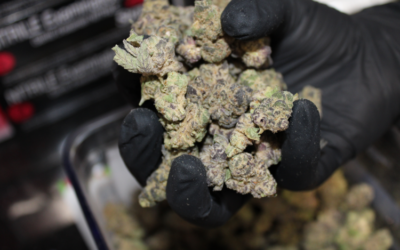
The smaller buds from the lower branches of the same plants. Same strain, same cultivation, same lab testing, noticeably cheaper, and they photograph badly. If you use a grinder, you’ll never notice the difference.
Shake
The loose material that collects at the bottom of a container. Usually destined for pre-rolls or extraction.
Trim
The leaf material cut away from the buds at harvest. Lower in cannabinoids than the flower itself and commonly used for extraction.
Cure
The controlled drying and aging after harvest, typically a few weeks in sealed containers with careful humidity control. A good cure is most of what separates flower that smells alive from flower that smells like hay.
Nug run
Concentrate made from whole buds rather than trim. A trim run is the opposite and generally costs less.
Light dep, or dep
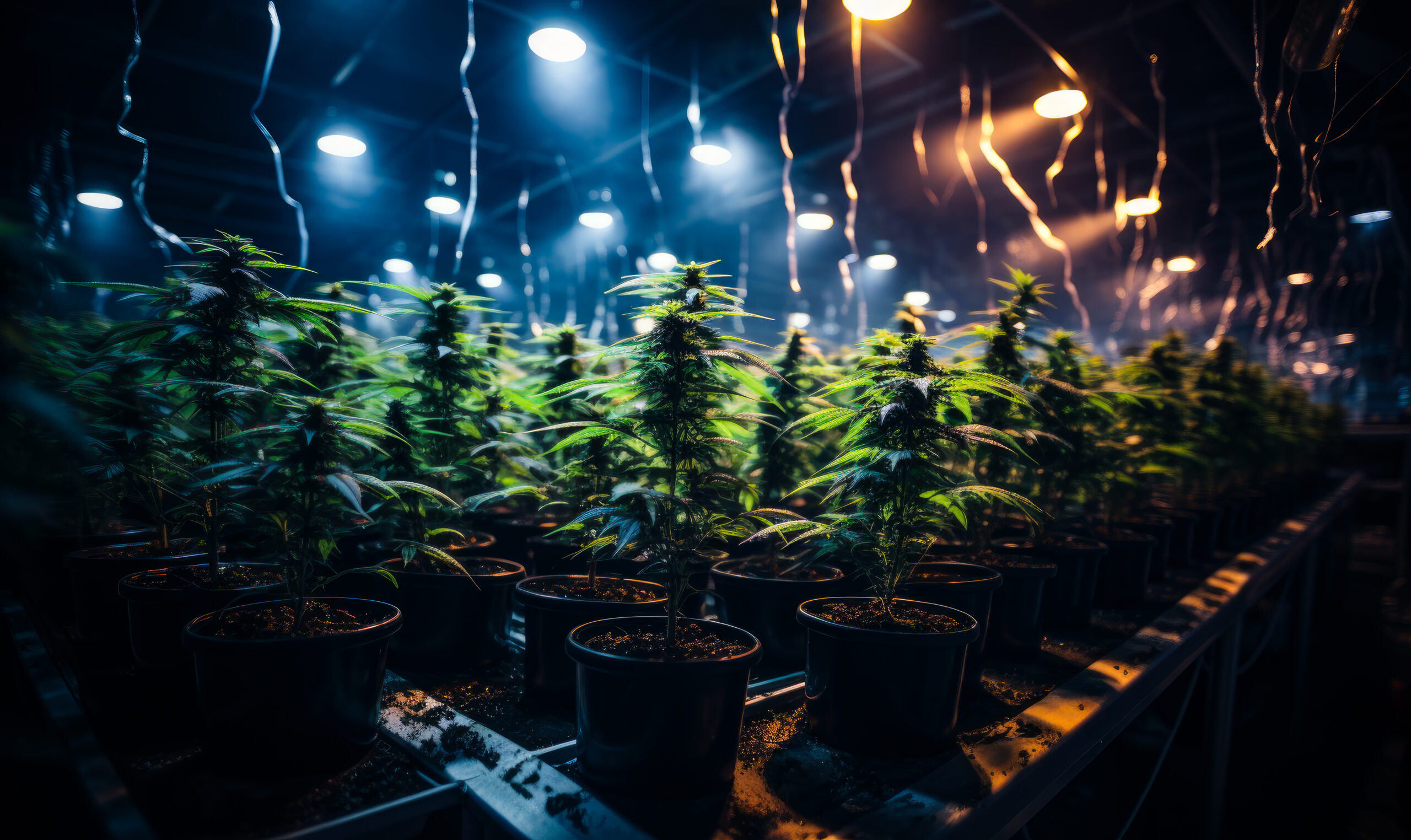
Light deprivation. A greenhouse technique that controls the plant’s light exposure to trigger flowering on schedule, giving growers some of the control of indoor cultivation with much of the cost advantage of sun.
Indoor, outdoor, greenhouse
Where the plant was grown. Indoor offers the most environmental control and costs the most to produce. Outdoor is the cheapest and the most weather-dependent. Greenhouse sits between the two.
Hand-trimmed
Finished with scissors rather than by machine. Slower, more expensive and gentler on the trichomes, which is why top shelf flower is usually hand-trimmed.
Chemistry on the label
Terpenes
The aromatic compounds responsible for how a plant smells, found in cannabis and also in pine, citrus peel and lavender. Common ones on Colorado labels include myrcene, limonene, pinene, caryophyllene and linalool.
THCA
Tetrahydrocannabinolic acid, the acidic precursor that makes up most of the THC content in raw cannabis. It converts to THC when heat is applied, which is what happens when you smoke, vape or bake it.
Total THC
The combined figure a label reports, calculated as THCA multiplied by 0.877 plus any delta-9 THC already present. The 0.877 accounts for weight lost during the conversion.
Entourage effect
A term for the idea that cannabinoids and terpenes interact to shape the overall experience rather than acting independently. It’s widely used in the industry and the supporting research is still limited, so treat it as a working theory rather than an established mechanism.
Kief
The powdery collection of trichomes that falls through a grinder screen. Essentially unpressed hash.
Trichomes
The resin glands on the surface of the flower, where most of the cannabinoids and terpenes are produced. They’re what makes good flower look frosted.
Concentrates
Resin
A concentrate made using a solvent such as butane, propane or CO2. Colorado requires residual solvent testing on these and the solvent has to be named on the label.
Rosin
A concentrate made with heat and pressure alone, no solvent involved. The solvent field on a rosin label will be empty.
Live
Made from plants that were flash-frozen at harvest instead of dried and cured, which preserves considerably more of the original terpene content.
Distillate
The most refined concentrate in the case. Repeated processing strips away everything except the target cannabinoid, producing a clear oil that often tests above 90% THC and has almost no smell or taste.
Hash and bubble hash
Solventless concentrates made by separating trichomes from the plant mechanically. Bubble hash, also called ice water hash, uses ice water and a series of mesh screens.
Shatter, badder, budder, crumble, sugar, sauce
Textures rather than production methods. The same extract can be finished as a glassy shatter, a whipped badder or a loose sauce depending on how it’s handled after extraction.
Diamonds
Crystallized THCA, usually sold sitting in a pool of terpene-rich sauce. The diamonds carry the potency and the sauce carries most of the flavor.
FSE and HTE
Full spectrum extract and high terpene extract. Both describe concentrates made to retain as much of the plant’s original chemical profile as possible.
Dab
A single dose of concentrate vaporized against a heated surface.
Vapes and pre-rolls
Cart
Short for cartridge. A small tank of cannabis oil that screws onto a battery.
510 thread
The near-universal connection standard between cartridges and batteries. The name describes the physical thread, which has ten threads at a half-millimeter pitch. Any 510 cart fits any 510 battery.
Disposable
An all-in-one vape with the battery built in, used until it’s empty and then discarded.
Pod
A cartridge built for one manufacturer’s specific battery rather than the 510 standard. Pods only fit their own system.
Infused pre-roll
A pre-roll with concentrate added, either coated on the outside, mixed into the flower, or run through the center. Substantially stronger than a standard pre-roll.
Cone
A pre-formed paper, wider at the top than the bottom, that gets packed rather than rolled.
Edibles and drinks
Nanoemulsion
The process of breaking cannabis oil into particles small enough to stay suspended in water, which is what makes modern THC seltzers mix properly and come on faster than traditional edibles. Our guide to THC drinks goes deeper.
Tincture
A liquid cannabis product, usually alcohol or oil based, dosed with a dropper.
Serving vs package
Colorado caps a single recreational edible serving at 10 mg of THC. The package total is listed separately, so a 100 mg package contains ten servings.
Still stuck on a word?
Ask. Nobody behind the counter minds explaining what a term means, and plenty of this vocabulary is regional or specific to one producer anyway.
If you want more depth on particular corners of this list, we’ve written about indica, sativa and hybrid labels, the role of terpenes and how to store cannabis so it keeps.
Browse the menu or see this week’s deals.
Frequently asked questions
What does top shelf mean at a dispensary?
It’s the highest price tier, reflecting appearance, aroma, cure quality and potency. Each shop sets its own tiers, so top shelf at one store isn’t a standardized grade.
What is nug run concentrate?
Concentrate made from whole buds instead of trim. It generally costs more and is considered higher quality than a trim run.
What does light dep mean?
Light deprivation, a greenhouse method that controls the plant’s light exposure to trigger flowering on a schedule. It offers more control than full outdoor growing at lower cost than indoor.
What is the difference between resin and rosin?
Resin is made with a solvent. Rosin is made with heat and pressure alone. One letter apart, completely different processes.
What does 510 thread mean on a vape cart?
It’s the standard connection between cartridges and batteries, named for its ten threads at a half-millimeter pitch. Any 510 cartridge fits any 510 battery.
Is kief the same as hash?
Close. Kief is loose trichome powder. Hash is kief that has been pressed or otherwise consolidated.
For adults 21 and older. Please consume responsibly and never drive under the influence.